
Every startup begins with a vision. But transforming that vision into words that resonate? That’s where many struggle.
If you sound like everyone else or different every time you communicate, you’re missing opportunities to connect. A brand voice creates recognition through consistent and authentic communication. Branding agencies specialize in defining your brand’s voice.
Discovery and Foundation Work
- Understanding Your Core Identity
Before a single word of copy gets written, branding agencies dig deep. The discovery phase is about understanding who you really are, not who you think you should be. This typically spans two to four weeks of intensive research and structured dialogue.
The process starts with stakeholder interviews. These aren’t casual conversations; they’re structured dialogues designed to unearth your founder’s vision, values, and the authentic passion behind the business. A tech startup branding agency will ask uncomfortable questions: Why does this company exist? What would be lost if it disappeared tomorrow? What do you stand for, and what are you firmly against?
- Analyzing Your Audience
Agencies analyze your target audience, examining not only demographics but also psychographics. How does your ideal customer talk? What media do they consume? What language resonates with them versus what makes them tune out? You need to speak your customer’s language, not just them. A fintech startup targeting younger consumers will need a radically different voice than one serving financial advisors approaching retirement.
- Mapping the Competition
The competitive landscape assessment comes next. Agencies audit how your competitors communicate, looking for patterns and opportunities. If everyone in your space sounds buttoned-up and corporate, there might be whitespace for a more conversational approach. If competitors are all trying to be funny and irreverent, perhaps a thoughtful approach to expertise is your angle.
Through this discovery work, agencies help you identify your core values and mission, not the aspirational statements you think investors want to hear, but the authentic principles that will guide every communication decision moving forward.
Defining Brand Personality
- Visualizing Your Brand as a Person
With research in hand, agencies move into the creative heart of voice development: defining your brand’s personality.
Think of your brand as a person. How would they show up at a party? Are they the energetic storyteller commanding attention, or the thoughtful listener who asks insightful questions? Agencies use personality frameworks to help you visualize this, often through spectrum exercises.
- Using Personality Spectrums
These exercises place your brand on continuums between opposing traits. Are you more authoritative or collaborative? Sophisticated or accessible? Playful or serious? Bold or measured? There are no wrong answers, only choices that align with your mission and audience expectations.
For example, a cybersecurity startup might lean toward authoritative and serious, but not so far that it becomes intimidating or cold. They need to strike a balance between expertise and approachability. Slack exemplifies this balance, maintaining professional credibility while staying approachably friendly throughout its product. A sustainable fashion brand might strike a balance between playfulness and accessibility while maintaining sophistication in its aesthetic sensibilities.
- Applying Brand Archetypes
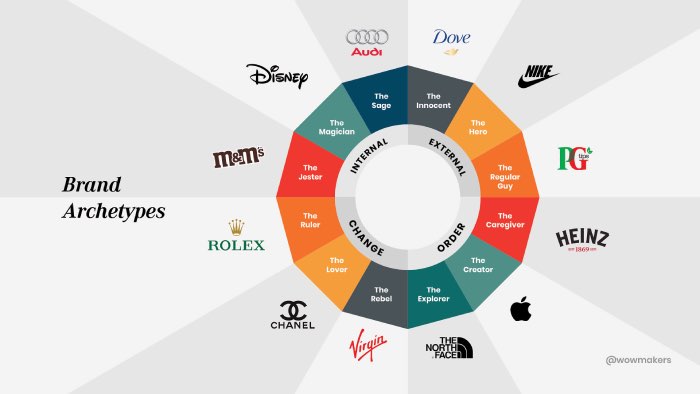
Agencies often introduce brand archetypes during this phase. Are you the Hero, charging forward to solve problems? The Sage, offering wisdom and guidance? The Rebel, challenging the status quo? These archetypes provide a psychological framework that makes your voice feel cohesive and grounded in recognizable human patterns.
- Balancing Authenticity and Positioning
The critical balance agencies help you strike is between authenticity and market positioning. Your voice needs to feel genuine to your team; forced enthusiasm or artificial gravitas will always ring hollow. But it also needs to resonate with your audience and differentiate you from competitors. Agencies navigate this tension through iterative exploration, testing different approaches until they find the sweet spot.
Creating Tangible Voice Guidelines
- Translating Concepts into Action
Personality frameworks are intellectually satisfying, but they’re abstract. The real value lies in brand startup agencies translating these concepts into concrete, actionable guidelines that anyone on your team can apply.
- Building Comprehensive Documentation
This is where comprehensive voice and tone documentation comes in. Mailchimp set a standard here, creating detailed guidelines that empower hundreds of team members to maintain consistency across their operations. Agencies create detailed guides that define your voice attributes with clarity and nuance. Instead of simply saying «be friendly,» they’ll specify what friendly means for your brand. Does it mean using casual contractions and addressing readers as «you»? Does it include humor, and if so, what kind – self-deprecating, observational, or witty wordplay?
- Defining Style and Vocabulary
Style guides outline specific recommendations. Use contractions, or avoid them? Write out numbers under ten, or use numerals? Start sentences with «and» or «but»? These micro-decisions add up to a distinctive style. More importantly, agencies address vocabulary choices. What terms do you embrace, and which do you avoid? A healthcare startup might use «patients» rather than «users» to emphasize humanity over technology.
- Showing Voice in Action
The principle is simple: clarity wins. The most valuable sections are those that show voice in action through examples. Agencies create before-and-after samples, demonstrating how a generic message transforms when filtered through your voice. They demonstrate how the voice adapts across various contexts, including social media posts, error messages, onboarding emails, and customer support responses.
- Creating Messaging Hierarchies
Agencies also build messaging hierarchies that cascade from your highest-level positioning down to tactical messages. Your tagline captures your essence in a few words. Your value proposition expands on this. Key messages support your value proposition with specific proof points. All of these elements work together, each one reinforcing the others in a consistent voice.
Testing and Refinement
- Real-World Application
A voice that looks perfect in a document might fall flat in the real world. That’s why agencies emphasize testing and refinement as essential steps in the process.
The voice is applied across different channels and contexts to assess its performance. How does it sound in a LinkedIn post versus an Instagram story? Does it maintain consistency in a technical product description and a playful promotional email? Rigorous testing, often including structured comparisons across channels, validates effectiveness before full rollout.
- Gathering Feedback
Agencies help you understand that consistency doesn’t mean being identical; your voice can adapt to suit the medium while maintaining a recognizable DNA. Real-world testing often reveals gaps or opportunities for improvement. Maybe the voice feels right in marketing materials, but too casual for investor communications. It may resonate with one audience segment but alienates another. Agencies gather this feedback systematically, from internal teams, early customers, and stakeholders.
- Iterating and Adjusting
The refinement process is iterative. Based on feedback, agencies adjust the guidelines, add new examples, or recalibrate certain attributes. They help you distinguish between productive evolution and drift. Some flexibility is healthy. Your voice should mature as your company grows. But sudden shifts erode recognition and trust.
- Building Channel Flexibility
Agencies also ensure you have channel-appropriate flexibility built into your guidelines. Your core voice remains constant, but the tone might shift. A brand can be consistently helpful, varying the tone from enthusiastic in marketing to empathetic in support to confident in sales materials.
Implementation and Training
- Making Guidelines Usable
Guidelines are only valuable if people use them. This is where many startups stumble without agency support; they create beautiful brand books that gather digital dust.
Brand equity flows from consistent presentation across every touchpoint. Agencies understand that implementation requires education and enablement. They conduct workshops, typically over one to two weeks, to introduce your team to the brand voice, walking through the guidelines with real examples and practice exercises. These sessions transform abstract concepts into muscle memory.

- Creating Practical Tools
Beyond training, agencies create practical templates and frameworks for ongoing content creation. Email templates with voice-appropriate subject lines and body copy. Social media post frameworks that maintain your voice across platforms. Blog post outlines that ensure consistency. These tools empower your team to create on-brand content without needing to constantly consult the guidelines.
- Establishing Governance
As your startup scales, governance becomes critical. Agencies help you establish processes for maintaining voice consistency. Who reviews content before it goes live? How do you onboard new team members or contractors? What happens when someone creates content that doesn’t align with the voice?
- Building Self-Service Resources
They also build resources that future hires can access independently. Video tutorials, voice quizzes, and annotated examples make it easy for new content marketers or customer success representatives to get up to speed quickly. The goal is to embed the voice into your company culture so deeply that it becomes second nature.
The Long-Term Value
- Measurable Business Impact
Studies show consistent brand presentation increases revenue and reduces customer acquisition costs. These aren’t abstract benefits; they’re real business outcomes.
Investing in professional brand voice development early might seem like a luxury when you’re watching every dollar. But the return compounds over time. Warby Parker’s witty and accessible voice contributed to strong brand awareness among their target demographic within just a few years. Mailchimp’s comprehensive voice supported their growth without losing consistency as they scaled.
- Building a Defensible Asset
A strong brand voice becomes a competitive advantage that’s difficult to replicate. Competitors can copy your features, undercut your pricing, or mimic your design. However, they can’t authentically replicate your voice; your voice is inherently tied to your values, mission, and the unique individuals behind your company.
- Scaling Consistency
As you scale, consistency becomes exponentially more valuable. When you have five people creating content, maintaining a coherent voice through osmosis is possible. When you have fifty people across marketing, sales, support, and product, without clear guidelines, your brand fragments. Customers encounter different versions of your company depending on where they interact with you, eroding trust and recognition.
- Accelerating Content Creation
Brand voice also accelerates content creation. Teams work faster once voice guidelines are established. Instead of agonizing over every word choice or debating tone in endless message threads, your team has a clear framework for making decisions. This efficiency translates to faster launches, more consistent output, and reduced revision cycles.
- Attracting the Right People
Perhaps most importantly, a well-defined voice attracts people who resonate with it, customers, employees, and partners who share your values. It acts as a filter, helping you build a community of people who genuinely connect with your mission rather than a broad audience that’s mildly interested.
- Ongoing Evolution
The partnership between startups and branding agencies doesn’t end when the guidelines are delivered. The best relationships are ongoing. As your company evolves, enters new markets, or launches new products, agencies help you adapt your voice while maintaining its core essence. They’re the external perspective that keeps you honest and consistent, even as internal pressures push you in different directions. In this way, corporate branding services provide continuous strategic support, ensuring that your brand identity remains cohesive and effective as your business grows and changes.
Common Questions About Brand Voice Development
How long does it take? Comprehensive development typically runs 6 to 12 weeks. Discovery takes two to four weeks, defining personality and creating guidelines takes another two to three weeks, and testing with refinement requires an additional two to four weeks.
What does it cost? Investment ranges from $5,000 for basic discovery and guidelines to $75,000 or more for comprehensive development with implementation support. Most startups see strong returns within the first year.
Can we do this internally? While possible, agencies bring systematic frameworks, an objective perspective, and proven methods that internal teams typically lack. DIY approaches often require expensive rebranding down the road.
How does voice differ from tone? Voice represents your consistent personality as a brand. Tone refers to how a personality adapts to different contexts. Your voice remains consistent whether you’re writing marketing copy or support responses, but the tone shifts from enthusiastic to empathetic.
Which startups have strong voices? Mailchimp demonstrates friendly expertise, Slack balances professional warmth, and Warby Parker uses witty accessibility. These companies show how a distinctive voice drives recognition and loyalty.
Getting Started
If your startup still sounds like everyone else, or worse, sounds like a different company depending on who’s writing it, it’s time to get serious about your brand voice.
The investment in professional guidance pays dividends from day one, creating clarity internally and recognition externally. Your voice is one of the few truly defensible assets you’ll build. Choose it intentionally, document it thoroughly, and watch it become the thread that connects every interaction with your brand into a cohesive, memorable experience.