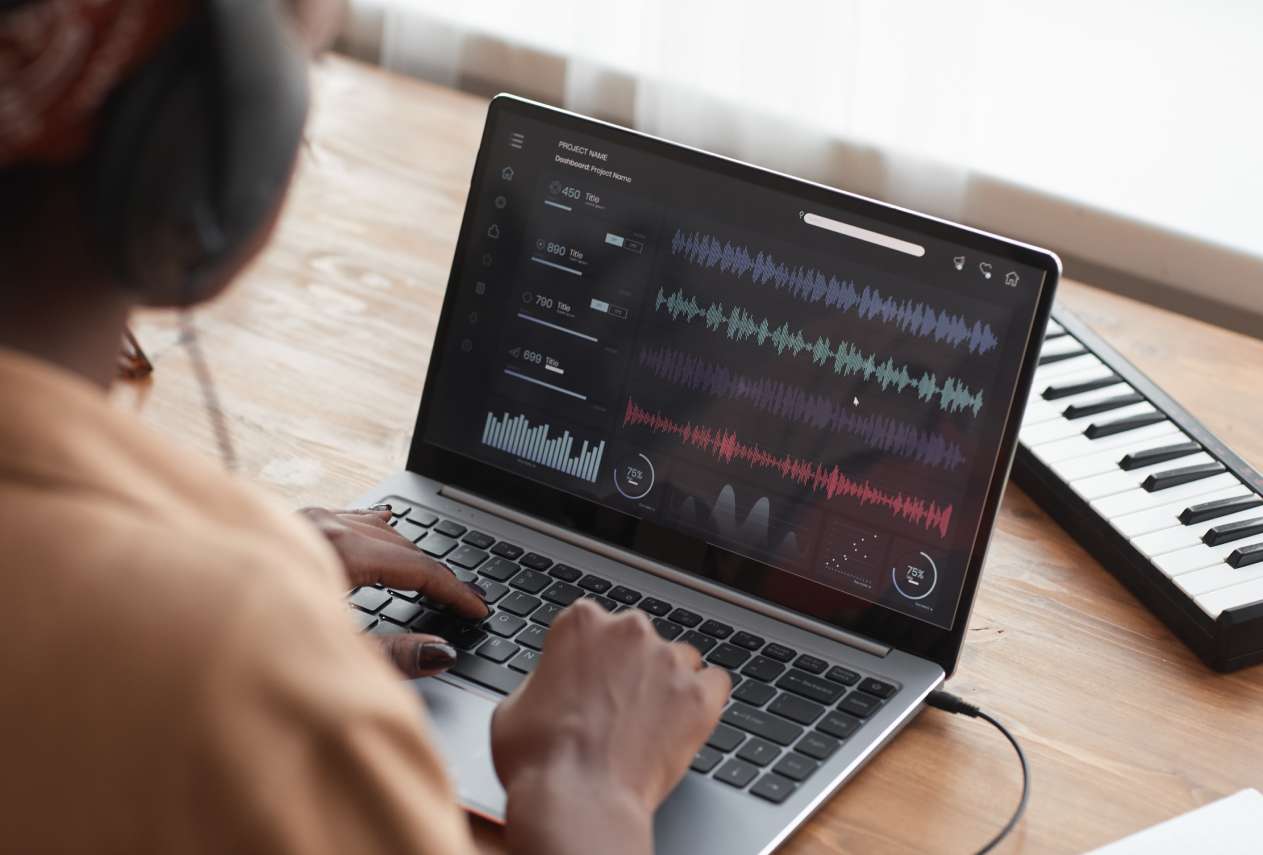
Artificial intelligence has become a foundational layer in many creative industries, and music production is no exception. What has changed most in recent years is not just the presence of AI, but the quality of data used to train and guide it. Intelligent data—structured, contextual, and pattern-aware—now sits at the core of AI music software, allowing systems to understand rhythm, harmony, and musical intent rather than simply generating sound.
This evolution is closely tied to the digital transformation of the music market. As production workflows move online and creators increasingly work across platforms, AI tools are expected to deliver speed, consistency, and adaptability. MusicArt represents a practical example of how data-driven AI systems are being applied to real music creation scenarios rather than experimental demos.
Structural Challenges in Traditional Music Production
- Complexity, Cost, and Fragmented Workflows
Traditional music production often requires multiple tools, plugins, and technical skills. For independent creators, this creates friction at the earliest stages of creation, where ideas are still forming. Audio editing, MIDI programming, and arrangement frequently exist as separate steps, slowing iteration.
From my own experience testing different production setups, the most time-consuming phase is not mixing or mastering, but translating an idea into a structured musical form. This gap is where AI music production tools attempt to intervene, especially when supported by intelligent data models trained on large and diverse musical datasets.
Intelligent Data as the Foundation of AI Music Systems
- Why Data Quality Matters More Than Algorithms
AI music software is only as effective as the data behind it. Intelligent data allows systems to recognize musical relationships, such as chord progressions, rhythmic patterns, and melodic contours. Instead of generating random outputs, modern AI tools can respond to creative intent with contextually relevant results.
Industry research on AI-driven creative tools consistently highlights data quality as the primary differentiator between usable systems and novelty products. MusicArt benefits from this trend by focusing on structured musical understanding rather than raw sound generation, which directly impacts workflow efficiency and output stability.
MusicArt as a Case Study in Data-Driven Music Creation
- Platform Overview and Core Capabilities
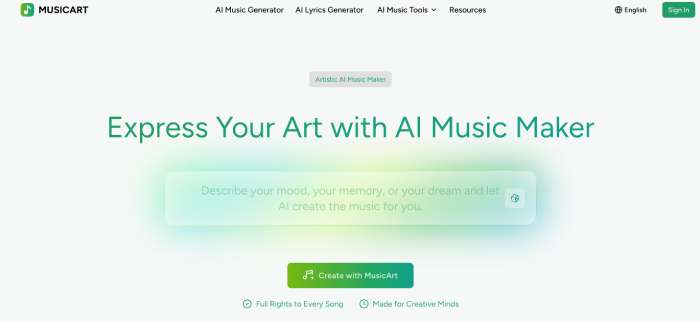
MusicArt is designed as an AI music creation platform that emphasizes usability and intelligent transformation. Rather than replicating a full digital audio workstation, it operates as a streamlined environment for generating, reshaping, and exporting musical ideas. This approach aligns well with current market demand for modular, task-specific tools.
During hands-on testing, MusicArt demonstrated consistent performance across different musical inputs. The interface prioritizes musical intent over technical detail, which reduces decision fatigue and speeds up early-stage production. This design choice reflects a broader shift toward outcome-oriented AI music software.
Audio to MIDI: A Key Workflow in AI Music Production
- Why Audio-to-MIDI Conversion Matters
Audio to MIDI conversion is a critical process in modern digital music creation. It allows recorded audio—such as melodies, chords, or rhythms—to be translated into editable MIDI data. This enables deeper control, easier rearrangement, and compatibility with virtual instruments.
In traditional workflows, accurate audio-to-MIDI conversion often required specialized plugins and manual correction. AI-powered systems improve this process by using pattern recognition and intelligent data mapping, reducing errors and preserving musical nuance.
- How MusicArt Fits Into This Process
MusicArt integrates audio transformation features that align with audio-to-MIDI workflows. In practical testing, converting melodic ideas into structured formats allowed for faster experimentation and refinement. This capability supports a more fluid creative cycle, especially for creators who move between sound design and composition frequently.
Practical Usage: From Idea to Structured Output
A Real Testing Scenario
To evaluate MusicArt in a realistic setting, I tested it using a simple recorded chord progression. The goal was to transform this idea into a flexible, editable format suitable for further arrangement. The system handled the input smoothly, producing a structured output that maintained harmonic coherence.
What stood out was the reduction in manual cleanup. Compared to traditional audio-to-MIDI tools, the AI-assisted process required fewer corrections. This directly translated into time savings during early composition stages.
The Broader Impact on the Digital Music Market
AI music production is accelerating the digitalization of music creation and distribution. Industry reports on the creator economy indicate sustained growth in independent production and platform-native content. Tools like MusicArt contribute to this trend by lowering technical barriers and increasing output capacity.
This shift does not reduce artistic value. Instead, it reallocates creative effort toward concept, storytelling, and audience connection. Intelligent data allows AI systems to handle structure, freeing creators to focus on meaning and context.
Final Reflections
AI music production is evolving from experimentation to infrastructure. Intelligent data is the driving force behind this transition, enabling tools to understand music rather than merely generate sound. MusicArt serves as a practical example of how AI, data, and workflow design intersect to support modern music creation.
Based on hands-on testing and real usage scenarios, MusicArt demonstrates how AI can enhance efficiency without undermining creativity. As the digital music market continues to expand, data-driven AI tools will play an increasingly central role in shaping how music is created, adapted, and shared.